SOC 1 vs SOC 2 vs SOC 3: Understanding the Differences Between SOC Compliance Reports
System and Organization Controls (SOC) reports—developed by the American Institute of Certified Public Accountants (AICPA)—are critical for organizations aiming to assure clients of their security, privacy, and internal controls. But with multiple types of SOC reports available, many organizations ask:
“Which SOC report do we actually need—SOC 1, SOC 2, or SOC 3?”
This guide breaks down the purpose, audience, scope, and structure of SOC 1, SOC 2, and SOC 3 to help you determine the right path for your compliance journey.
What Are SOC Reports?
SOC reports evaluate and attest to an organization’s internal controls based on standards set by the AICPA. The three types—SOC 1, SOC 2, and SOC 3—serve different purposes but all aim to promote trust and transparency.
It’s important to note:
SOC 1 does not precede SOC 2. SOC 3 is not more advanced than SOC 2. Each type serves a distinct purpose based on the services you offer and the needs of your customers.
SOC 1 Report: Focus on Financial Reporting
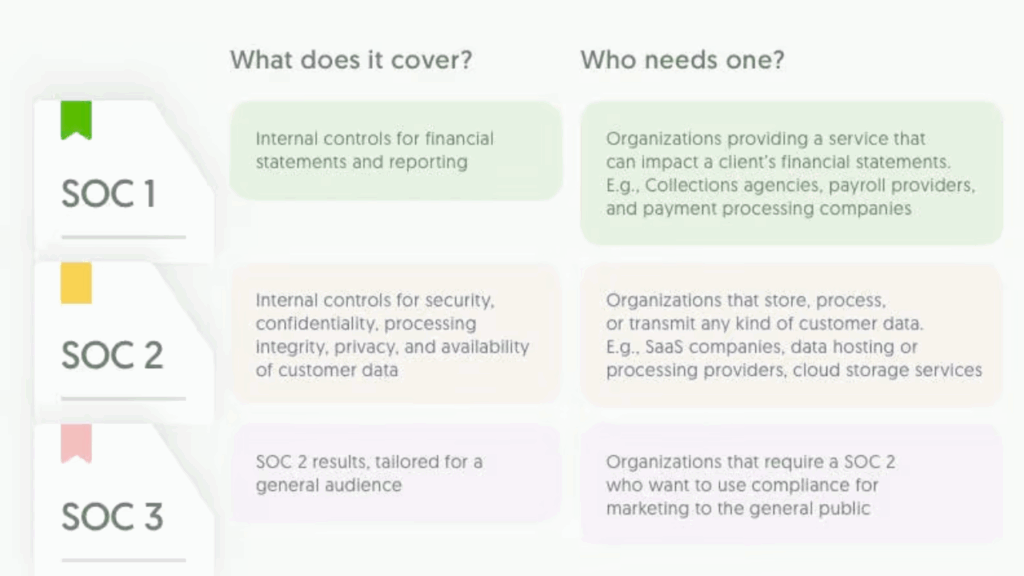
SOC 1 is designed for service organizations that affect their clients’ financial reporting. This includes companies involved in:
Payroll processing
Claims management
Transaction handling
Financial services or accounting platforms
A SOC 1 report focuses on Internal Controls over Financial Reporting (ICFR). It’s most relevant if your clients depend on your systems to prepare accurate financial statements.
SOC 1 Type I vs Type II
Type I: Evaluates controls at a specific point in time
Type II: Assesses how controls operate over a period of time (typically 3-12 months)
SOC 2 Report: Focus on Data Security & Trust
SOC 2 is based on the Trust Services Criteria (TSC) and is ideal for technology and SaaS companies managing customer data in the cloud. It evaluates how an organization manages:
Security (required)
Availability
Processing Integrity
Confidentiality
Privacy
SOC 2 helps prove that your systems are secure, available, and trustworthy—a major expectation among enterprise clients, particularly in sectors like finance, healthcare, and e-commerce.
SOC 2 Type I vs Type II
Type I: Validates control design at a specific date
Type II: Examines the operational effectiveness of those controls over time
💡 Most customers, especially enterprises, prefer SOC 2 Type II for deeper assurance.
SOC 3 Report: General-Purpose Attestation
SOC 3 is essentially a public summary of a SOC 2 Type II report. While it is based on the same Trust Services Criteria and goes through the same rigorous audit process, it is designed for broad distribution—ideal for marketing or public assurance purposes.
Key Differences from SOC 2:
Feature
SOC 2
SOC 3
Report Type
Type I or Type II
Always Type II
Audience
Restricted (under NDA)
General public
Detail Level
High (audit procedures, test results)
Low (summary-level info)
Use Case
Customer due diligence
Marketing & public trust
SOC 3 reports are best used on websites, investor decks, or press releases to showcase your security posture without exposing sensitive details.
Which Report Does Your Business Need?
If you are a…
You likely need…
Payroll or financial processing firm
SOC 1
SaaS or cloud service provider
SOC 2
Looking for public-facing trust signal
SOC 3
Some companies pursue both SOC 1 and SOC 2 based on their service offerings and client requirements. For example, a company managing financial transactions in a secure cloud environment might need both.
SOC Report FAQs
Q: Is SOC 3 better than SOC 2? A: No. SOC 3 is simply a summarized, public version of SOC 2 Type II. It’s not more comprehensive.
Q: Do I need a SOC 1 before SOC 2? A: No. SOC 1 and SOC 2 are independent and serve different compliance needs.
Q: Can I use a SOC 3 report for customer due diligence? A: Not really. SOC 3 lacks the detail most clients require. Use SOC 2 reports (usually under NDA) for that.
Q: What if I need both SOC 1 and SOC 2? A: You can work with your auditor to streamline testing and reduce redundancy across both reports.
Final Thoughts
SOC 1, SOC 2, and SOC 3 reports serve different but essential roles in today’s compliance-driven business world.
SOC 1 proves your impact on customer financials is secure.
SOC 2 proves your systems are trustworthy and secure.
SOC 3 promotes public trust without giving away sensitive details.
Choosing the right SOC report depends on your business model, client base, and data responsibilities. If your customers are asking for assurance, chances are they’re asking for SOC 2.