

In the course of a SOC 2 examination, an impartial third-party service auditor, such as Securis360, evaluates your internal controls and business processes against the relevant and selected SOC 2 trust services criteria. Subsequently, a report is generated by Securis360, which you can then share with customers and other stakeholders, assuring them that their data is secure in your care. A Type 1 SOC 2 Report is beneficial for organizations seeking to showcase their dedication to data security to stakeholders and customers. This report assesses the effectiveness of your controls and processes, focusing on their design and implementation at a specific point in time. A Type 2 SOC 2 Report provides an assessment over an extended period, usually six months or more. Throughout the examination, the auditor evaluates the effectiveness of your controls, assessing both their design and implementation, and examines their operational efficiency in aligning with your chosen trust services criteria categories.
In today’s data-driven environment, ensuring the security of sensitive information is critical. SOC 2 compliance, developed by the American Institute of Certified Public Accountants (AICPA), provides a robust framework to evaluate a service organization’s security controls. Securis360 is your trusted partner in achieving and maintaining SOC 2 compliance, helping you demonstrate your dedication to safeguarding client data.
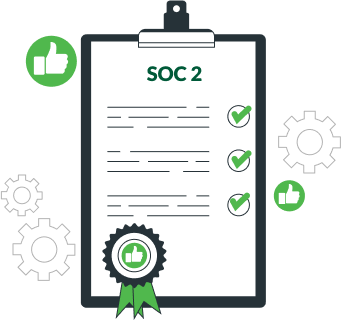
SOC 2 (Service Organization Control 2) focuses on the secure management of customer data based on five Trust Services Criteria (TSC): security, availability, processing integrity, confidentiality, and privacy. This framework is essential for service providers and third-party vendors responsible for handling sensitive information, including SaaS companies and other technology-based organizations.
SOC 2 compliance involves two main types of reports:
Type 1 SOC 2 Report
Type 2 SOC 2 Report
A SOC 2 report assures your customers and stakeholders that their data is secure and managed responsibly.
We help establish the scope of attestation by evaluating your current controls and processes against SOC 2 requirements. This readiness assessment identifies gaps and provides actionable recommendations to achieve compliance.
Our experts assist in developing and implementing the necessary controls to meet SOC 2 standards. Services include:
We partner with you to ensure your organization adheres to SOC 2 control requirements. Our team evaluates your system boundaries, processes, and internal controls, ensuring the report accurately reflects compliance.
Securis360 is a leader in SOC 2 compliance services. We are dedicated to helping organizations meet the highest standards of data security and operational excellence. Whether you need guidance on readiness assessments, remediation, or attestation, we have the expertise to ensure a successful SOC 2 examination.
SOC 2 (System and Organization Controls 2) is a cybersecurity and compliance framework developed by the AICPA to evaluate how organizations protect customer data and manage security controls.
SOC 2 Compliance refers to implementing security, privacy, availability, confidentiality, and processing integrity controls that align with SOC 2 requirements.
SOC 2 helps organizations:
Organizations commonly requiring SOC 2 include:
The purpose of SOC 2 is to verify that organizations securely manage customer data and maintain effective security controls.
The five Trust Services Criteria are:
No. SOC 2 is voluntary, but many enterprise customers and partners require it before doing business.
SOC 1 focuses on financial reporting controls, while SOC 2 focuses on cybersecurity, privacy, and operational security controls.
Industries commonly pursuing SOC 2 include:
Enterprise customers often require SaaS providers to demonstrate strong security, privacy, and operational controls.
A SOC 2 audit evaluates whether an organization’s controls meet SOC 2 Trust Services Criteria requirements.
SOC 2 Type 2 is generally considered stronger because it demonstrates continuous operational effectiveness.
SOC 2 timelines vary depending on organizational readiness, remediation needs, and audit scope.
Readiness assessment evaluates whether an organization is prepared for a SOC 2 audit.
Gap analysis identifies missing controls, security weaknesses, and compliance gaps before the audit process.
A SOC 2 audit typically includes:
Common evidence includes:
Yes. SOC 2 assessments commonly identify weaknesses in governance, monitoring, access control, and security operations.
Organizations may need remediation activities and follow-up assessments before obtaining a successful report.
Strong cybersecurity controls are essential for protecting customer data and meeting SOC 2 Trust Services Criteria.
Common controls include:
Access management ensures only authorized users can access systems, applications, and sensitive information.
Vulnerability management identifies and remediates security weaknesses affecting organizational systems and applications.
Incident response defines procedures for detecting, containing, investigating, and recovering from security incidents.
Yes. Strong SOC 2 security controls help reduce ransomware, phishing, and cyberattack risks.
Security monitoring detects suspicious activities, unauthorized access attempts, and cyber threats.
Logging and audit trails help organizations track user activities, security events, and operational changes.
Endpoint security protects laptops, desktops, servers, and mobile devices from cyber threats.
Zero Trust security continuously validates users and devices before granting access to systems or data.
Yes. SOC 2 commonly applies to AWS, Azure, Google Cloud, SaaS platforms, and hybrid cloud environments.
Cloud security protects cloud-hosted applications, workloads, APIs, identities, and storage environments.
SaaS governance manages security, privacy, compliance, and operational controls for cloud-based applications.
API security protects data exchanged between applications and systems from unauthorized access and attacks.
Encryption protects sensitive data during storage and transmission from unauthorized access.
SOC 2 commonly aligns with:
Vendor risk management evaluates third-party providers handling organizational systems or customer data.
Security awareness training educates employees about phishing, cyber threats, password security, and compliance responsibilities.
Business continuity planning helps organizations maintain operations during cyber incidents or outages.
Yes. SOC 2 strengthens governance, monitoring, operational security, and compliance maturity.
SOC 2 helps startups gain enterprise customer trust and accelerate business growth opportunities.
Common mistakes include:
SOC 2 implementation complexity depends on organizational size, security maturity, and operational readiness.
Major trends include:
Yes. SOC 2 demonstrates commitment to protecting customer data and maintaining strong security practices.
Yes. Small businesses and startups can improve security governance and enterprise readiness through SOC 2 adoption.
Popular certifications include:
Yes. Strong governance and cybersecurity controls improve organizational risk posture.
Organizations should conduct:
Look for: